source https://www.muscleandfitness.com/features/edge/9-unwritten-rules-slopes-beginner-skiers
The Best Supplements for Beginners
Why You Should Try Group Fitness, According to a Personal Trainer
Celebrity trainer Erin Oprea gives her take on the advantages and disadvantages of the popular training style.
Group fitness has been criticized for not teaching proper form but praised for creating a fun gym environment. Celebrity trainer Erin Oprea gives her take on the advantages and disadvantages of the popular training style.
[RELATED1]
function videoLoadCallback () {
var playerInstance = jwplayer(“botr_jBpEJdst_7gqkdwId_div”);
setTimeout(function(){
playerInstance.setup({
playlist: “//content.jwplatform.com/feeds/jBpEJdst.json”,
image: “//content.jwplatform.com/thumbs/jBpEJdst-720.jpg”,
ph: 2,
advertising: {
“admessage”: “This video will resume in xx seconds”,
“client”: “googima”,
“cuetext”: “Advertisement”,
“skipmessage”: “Skip ad in xx seconds”,
“vpaidmode”: “insecure”
},
plugins: {
“https://ovp.iris.tv/plugins/jwplayer/v2/iris-jwplayer8.adaptive.min.js”: {
settings: {
player_id: “botr_jBpEJdst_7gqkdwId_div”,
client_token: ‘ER0ZY06XV3YJHK0’,
platform_id: “jBpEJdst”,
player_version: ‘jwplayer8’,
ssl: true,
end_up_next: true,
disable_mobile_upnext: false,
campaign_tracking: true
},
global: “iris”,
jwCMS: true,
iris_buttons: {
‘thumbs_up’: false,
‘thumbs_down’: false,
‘skip_forward’: false,
‘skip_back’: false,
‘skip_on_thumbs_down’: false
}
}
}
}).once(“play”, function(){
var playerInstance = jwplayer(“botr_jBpEJdst_7gqkdwId_div”);
loadIrisPlugin(playerInstance, playerInstance.getConfig().plugins[“https://ovp.iris.tv/plugins/jwplayer/v2/iris-jwplayer8.adaptive.min.js”%5D)
}).on(‘adsManager’, function (e) {
let chanIdVal = ”;
let jwpDef = jwplayer.defaults || {};
if (jwpDef.advertising) {
if (jwpDef.advertising.schedule) {
for (let j in jwpDef.advertising.schedule) {
if (jwpDef.advertising.schedule[j].tag) {
let parts = jwpDef.advertising.schedule[j].tag.split(‘iu=’);
if (2 == parts.length) {
chanIdVal = parts[1];
chanIdVal = chanIdVal.split(‘&’);
chanIdVal = chanIdVal[0];
break;
}
}
}
}
}
const {adsManager, videoElement} = e;
const iasConfig = {
anId: ‘928572’,
campId: `${jwplayer().getWidth()}x${jwplayer().getHeight()}`, // This is dynamic based on player dimensions, but can be hard coded
chanId: chanIdVal,
placementId: ‘Open Auction’,
pubOrder: ‘Video’,
pubId: ‘Direct’
};
if (googleImaVansAdapter) {
googleImaVansAdapter.init(window.google, adsManager, videoElement, iasConfig);
}
}).on(‘beforePlay’, function (e) {
var videoItem = this.getPlaylistItem();
if (typeof window.jwPlayedVideos[videoItem.mediaid] === ‘undefined’) {
window.jwPlayedVideos[videoItem.mediaid] = true;
try {
if (jwDefaults.advertising && jwDefaults.advertising.schedule[0].tag) {
window.jwVastTag = jwDefaults.advertising.schedule[0].tag;
}
} catch ( e ) {}
apstag.fetchBids({
slots: [{
slotID: ‘56226737’,
mediaType: ‘video’
}]
}, function (bids) {
if (bids.length > 0) { //If we have received any bids back
try {
jwplayer(“botr_jBpEJdst_7gqkdwId_div”).playAd(window.jwVastTag + “&scp=” + bids[0].encodedQsParams);
} catch (e) {
console.log(e);
}
} else {
jwplayer(“botr_jBpEJdst_7gqkdwId_div”).playAd(window.jwVastTag);
}
});
}
});
}, 1000);
}
var script = document.createElement(“script”);
script.type = “text/javascript”;
script.onload = videoLoadCallback;
script.async = true;
script.src = “//content.jwplatform.com/libraries/7gqkdwId.js”;
document.getElementsByTagName(“head”)[0].appendChild(script);
JW Player ID:
7gqkdwId
Counting Calories Is Overrated, According to Carrie Underwood’s Trainer
"You gotta break that vicious cycle of feeling yucky."
Although Erin Oprea is a celebrity trainer, she teaches a simple, yet effective path to a healthier lifestyle. On this episode, she discusses how to begin a workout program, the benefits of group training, and being a Marine vet.
[RELATED1]
function videoLoadCallback () {
var playerInstance = jwplayer(“botr_OH1IiGyB_7gqkdwId_div”);
setTimeout(function(){
playerInstance.setup({
playlist: “//content.jwplatform.com/feeds/OH1IiGyB.json”,
image: “//content.jwplatform.com/thumbs/OH1IiGyB-720.jpg”,
ph: 2,
advertising: {
“admessage”: “This video will resume in xx seconds”,
“client”: “googima”,
“cuetext”: “Advertisement”,
“skipmessage”: “Skip ad in xx seconds”,
“vpaidmode”: “insecure”
},
plugins: {
“https://ovp.iris.tv/plugins/jwplayer/v2/iris-jwplayer8.adaptive.min.js”: {
settings: {
player_id: “botr_OH1IiGyB_7gqkdwId_div”,
client_token: ‘ER0ZY06XV3YJHK0’,
platform_id: “OH1IiGyB”,
player_version: ‘jwplayer8’,
ssl: true,
end_up_next: true,
disable_mobile_upnext: false,
campaign_tracking: true
},
global: “iris”,
jwCMS: true,
iris_buttons: {
‘thumbs_up’: false,
‘thumbs_down’: false,
‘skip_forward’: false,
‘skip_back’: false,
‘skip_on_thumbs_down’: false
}
}
}
}).once(“play”, function(){
var playerInstance = jwplayer(“botr_OH1IiGyB_7gqkdwId_div”);
loadIrisPlugin(playerInstance, playerInstance.getConfig().plugins[“https://ovp.iris.tv/plugins/jwplayer/v2/iris-jwplayer8.adaptive.min.js”%5D)
}).on(‘adsManager’, function (e) {
let chanIdVal = ”;
let jwpDef = jwplayer.defaults || {};
if (jwpDef.advertising) {
if (jwpDef.advertising.schedule) {
for (let j in jwpDef.advertising.schedule) {
if (jwpDef.advertising.schedule[j].tag) {
let parts = jwpDef.advertising.schedule[j].tag.split(‘iu=’);
if (2 == parts.length) {
chanIdVal = parts[1];
chanIdVal = chanIdVal.split(‘&’);
chanIdVal = chanIdVal[0];
break;
}
}
}
}
}
const {adsManager, videoElement} = e;
const iasConfig = {
anId: ‘928572’,
campId: `${jwplayer().getWidth()}x${jwplayer().getHeight()}`, // This is dynamic based on player dimensions, but can be hard coded
chanId: chanIdVal,
placementId: ‘Open Auction’,
pubOrder: ‘Video’,
pubId: ‘Direct’
};
if (googleImaVansAdapter) {
googleImaVansAdapter.init(window.google, adsManager, videoElement, iasConfig);
}
}).on(‘beforePlay’, function (e) {
var videoItem = this.getPlaylistItem();
if (typeof window.jwPlayedVideos[videoItem.mediaid] === ‘undefined’) {
window.jwPlayedVideos[videoItem.mediaid] = true;
try {
if (jwDefaults.advertising && jwDefaults.advertising.schedule[0].tag) {
window.jwVastTag = jwDefaults.advertising.schedule[0].tag;
}
} catch ( e ) {}
apstag.fetchBids({
slots: [{
slotID: ‘56226737’,
mediaType: ‘video’
}]
}, function (bids) {
if (bids.length > 0) { //If we have received any bids back
try {
jwplayer(“botr_OH1IiGyB_7gqkdwId_div”).playAd(window.jwVastTag + “&scp=” + bids[0].encodedQsParams);
} catch (e) {
console.log(e);
}
} else {
jwplayer(“botr_OH1IiGyB_7gqkdwId_div”).playAd(window.jwVastTag);
}
});
}
});
}, 1000);
}
var script = document.createElement(“script”);
script.type = “text/javascript”;
script.onload = videoLoadCallback;
script.async = true;
script.src = “//content.jwplatform.com/libraries/7gqkdwId.js”;
document.getElementsByTagName(“head”)[0].appendChild(script);
JW Player ID:
7gqkdwId
The Right Type of Exercise Can Help Control Diabetes
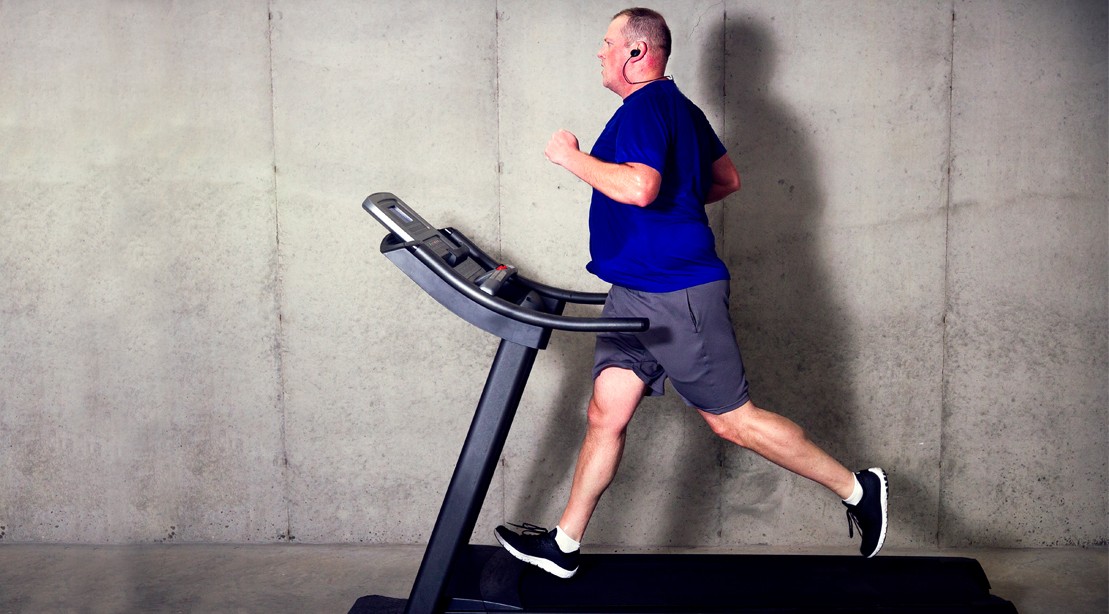
One of the most common pieces of advice for people with diabetes is to exercise, since it can help lower blood sugar levels and reduce weight. Plus, there are plenty of other benefits to exercise that improve overall wellness and may have a tangential connection to diabetes, potentially easing symptoms—effects like better sleep, improved immune response, more energy, less sugar cravings, and lower stress.
But just throwing out the advice to “get some movement” or to join a gym isn’t appropriate in the way it would be for those without the condition. In fact, it could even put them at risk.
“Both types of diabetes, Type 1 and Type 2, benefit from exercise, especially if weight is an issue, but they have to be careful in terms of when and how that exercise happens,” says Joshua Scott, M.D., primary care sports medicine physician at Cedars-Sinai Kerlan-Jobe Institute in Los Angeles. “That’s especially true when you put medication into the equation.”
For example, he says, many diabetes medications lower blood sugar levels. But exercise also provides that effect, which means those with diabetes could experience hypoglycemia—also called low blood sugar, when the body begins running out of glucose as energy—both during and after exercise.
“That hypoglycemia can possibly be late onset, which means it could begin up to 24 hours after exercise,” says Scott. “That means they could bottom out by doing this thing that’s supposed to be so good for them.”
That’s why being prepared with a proper plan, the right resources, and smart strategies around nutrition and snacks is crucial.
[RELATED1]
Find Appropriate Resources
There are thousands of online fitness classes and countless in-person options, not to mention personal trainers and wellness coaches. But as Scott noted, simply choosing one isn’t enough. In fact, exercising without diabetes-friendly advice could be highly detrimental.
That’s the impetus behind a recently developed digital app, GlucoseZone, that tailors workout advice for those with Type 1, Type 2, and prediabetes. The app provides guidance based on real-time blood glucose levels, as well as other variables like medication, fitness level, body weight, exercise preferences. It can also be integrated with wearable devices like insulin pumps, according to Charles O’Connell, GlucoseZone founder and CEO.
“I’ve met many people with diabetes who want to exercise, but they don’t know what to do,” he says. “They’re not lazy, quite the opposite. But they have unique requirements and they’re right to be cautious about workouts.”
The app has been in development for nearly four years, with clinical pilot programs that have led to refining the way the app works, he adds. By providing exercise programs that take not just fitness level into account but also real-time blood sugar monitoring and medication usage, GlucoseZone can be an important part of treatment, O’Connell believes.
“Every medication for Type 2 diabetes is indicated for use as an adjunct to nutrition and exercise,” he says. “That means if you’re not exercising, the medications don’t work the way they should. Also, there’s a difference between Type 1 and Type 2, and the exercise guidance should be different, too. We believe this helps to fill a gap in the standard of care.”
Even if you’re completely new to exercising, the app can help you get started, according to diabetes fitness trainer Justin Emmans, who develops content for GlucoseZone, including its beginner program, Couch to 7.0 (the A1c level considered an ideal target for people with diabetes).
As a Type-1 diabetic himself, Emmans began exercising as a way to control his diabetes, but struggled to keep his blood sugar at just the right level to prevent hypoglycemia while working out. He got involved with GlucoseZone as a way to help others facing the same challenges.
“Exercise is tough for people with diabetes because they’re always trying to navigate what’s effective and safe,” he says. “This takes the guesswork out, so people can enjoy their workouts.”
Fuel Up Before and After Correctly
In addition to using GlucoseZone, a huge part of diabetes control is understanding pre-workout and post-workout nutrition options as well.
“A pre-workout snack or meal containing carbs is much more likely to provide the quick energy your body needs to have an effective workout than a supplement,” says dietician McKenzie Caldwell, R.D.,N., owner of Feed Your Zest Nutrition & Wellness, who has diabetes nutrition as one of her specialties. “Depending on intensity, length, and timing of your workout, as well as medication or insulin, how you eat to fuel a workout may differ slightly from your overall eating pattern to manage diabetes.”
For example, she says, the protein, fiber, and fat that keep blood glucose from spiking after a balanced meal with carbs may work for those who aren’t on insulin or who are doing a low-intensity workout. However, someone who is on medication and up for a HIIT workout may need to eat more simple carbs before exercise to keep blood sugar from getting too low.
In terms of post-workout options, Caldwell recommends the “rule of 15,” which means 15 grams of carbs within 15 minutes after you end an exercise session. Combine it with protein, she adds, and you’ll get muscle-building benefits as well.
But if you test your glucose after working out and it’s below 100 mg/dL, you could be at risk for low blood sugar, she says. In that case, ditch the protein and go for simple carbs like half a cup of juice or a tablespoon of honey. Wait 15 minutes, and test again. Repeat until your blood sugar level rises above 100 mg/dL, and add the protein into your next meal.
[RELATED2]
Download the Glucosezone app for workouts
No
source https://www.muscleandfitness.com/flexonline/news/right-type-exercise-can-help-control-diabetes
7 Things to Expect on Your Fat-Loss Journey
10 of Juliana Esteso’s Most Impressive Instagram Posts
Intermittent fasting is a great lifehack
Apart from bringing about great benefits for your health, intermittent fasting benefits your overall lifestyle. When you are only eating once or at best, twice a day, you do not need to worry about what to eat and how much to eat. Not only does it save you money, it also frees up extra time in which you are free to pursue other interests that you might have. All the energy that you spent otherwise planning your meals can now be channeled to other productive ventures.
Similarly, if you miss a workout you do not have to start panicking and counting your calories. As a part of intermittent fasting, you are eating lesser times a day so that worry never arises. Most people are surprised by how easily this style of fasting fits into their daily lives and once they see the advantages they never go back.
How much weight can you lose with intermittent fasting?
The question “How much weight can you lose with intermittent fasting?” is often asked. The answer is since it is not a diet that requires extensive planning or shopping for particular food items, slipping into the intermittent fasting mode is super easy.
In the beginning most of the people who adopted this lifestyle did so by fasting for 24 hours, twice a week. That is 2 days out of 7, they would not eat anything. While that is still a strategy that is ideal for maintaining weight (post weight loss) and for overall health, other daily schedules have proven to be much more effective.
One of them was the 8-hour window we mentioned above. You fast for 16 hours (including sleep time) and eat for the rest of the 8. When you want to start the fast depends entirely on your own personal situation.
For example, if you have a regular 9 to 5 job then you might chose to skip breakfast altogether (who has the time for it anyways?). Instead you could start the eating window with a lunch at 12 PM or 1 PM and end the window with a dinner at 7:30 or 8:30. To be frank that is really an ideal way to eat as majority of your day is covered well. You can easily squeeze in a mid day lunch, an evening snack and an early dinner into this 8 hour window.
If you are looking for rapid weight loss then you can shorten this to a 6-hour window, however it is not recommended until you have eased yourself into an intermittent fasting lifestyle over time. You can however speed up weight loss by eating clean, following a diet plan like Keto or Paleo. You should read pros of intermittent fasting here.
If you feel apprehensive or encounter difficulty starting with this, then it is better to start slow and do it a few times a week, like on every alternate day. After a couple of weeks your body should get used to it and then you can increase the number of days on which you fast, bringing to up to a full 7 days a week in time.
In conclusion
All in all learning how much weight can you lose with intermittent fasting as well as implementing it is are very simple concepts that asks you to merely shift the times at which you eat. As serious as the word fasting sounds, it is in no way a drastic change to your lifestyle and neither does it involves any form of starving.
Intermittent fasting might seem like something that goes against everything we thought was good for us but in reality those age old ‘rules’ were nothing but myths. Just let the results do the talking and you will realize what a big difference it brings about in your life.
How LA Sports Writer Arash Markazi Lost 130 Pounds and Kept It Off

Arash Markazi couldn’t have felt more embarrassed. While boarding a plane, the Los Angeles Times sports columnist had to ask the flight attendant for a seatbelt extender. When he got home, he weighed himself and hated what he saw—329 pounds.
“If you’re in the NFL and you’re on the offensive line, you might weigh that much,” says Markazi. “So, for me as a sports reporter who’s not tall to weigh that amount, yeah, it was one of those moments where I knew I had to make a change.”
With such a demanding job, it wasn’t hard for Markazi to slowly gain the weight. The 5’7” writer traveled from city to city, and he never missed an opportunity to sample the different regional fare. Cheesesteaks in Philadelphia, deep-dish pizza and hot dogs in Chicago, pastrami sandwiches in New York—he enjoyed them all. His diet wasn’t any better at home. He’d attend games, file his story, and leave the stadium at midnight, picking up McDonald’s or Jack in the Box on his way home.
Markazi says that whenever he tried to lose weight in the past, he would do the right things for a couple weeks, and then fall off the wagon. He’d be good at home, then go on a trip and fall back into his old habits. That humbling experience on the airplane was the final straw—he was ready to break the cycle.
To get started, Markazi hired a trainer to teach him the ropes and reinforce good habits. He started slowly and focused on cardio. First it was 20 minutes, then 30, eventually working his way up to 60 minutes on the treadmill, elliptical, or bike.
To supplement his workouts, he changed his diet—no more stadium foods and late-night drive-thru burgers. Instead, he aimed for 1,500 to 1,600 calories of healthy, whole foods each day, with plenty of salads, chicken, salmon, and vegetables. And to hold himself accountable, he began documenting his workouts and meals each day on Instagram.
His hard work quickly showed dividends, and Markazi lost 43 pounds after one month. He jokes that the easiest way to lose weight is to gain it in the first place and notes that in the first month he flipped a switch and his body simply responded. Sticking with it was his new challenge, but the differences he began seeing in his body and how he felt kept him going. That, plus the positive reinforcement of friends, colleagues, and even strangers kept him motivated.
At the end of a year, he lost 130 pounds.
Markazi’s dramatic transformation even drew the attention of one of the athletes he wrote about. It solicited compliments from contacts he hadn’t seen in awhile, and he even began to receive messages from people across his large social media following. That’s been one of the most rewarding and unexpected benefits of his journey.
“The people who reach out to me, that let me know that they’ve joined me on this journey, they inspire me,” he says.
Now, healthy living is just part of his routine. Even with his weight loss having surpassed triple digits, Markazi continues to do 60 minutes of cardio each day, usually opting for morning workouts to ensure he doesn’t get derailed. More recently, he added weight training into his regimen, employing online programs as his starting point. He admits that he needs to learn more and wants to enlist a trainer to help put him on the right path.
“The key for all of this is to be able to do this on my own,” says Markazi. “To be able to maintain while I’m on the road, to not be dependent on someone else.” That inner drive has kept him going strong more than a year since he first decided to make a change. Like all of us, Markazi is subject to pitfalls and bad days. But now, he’s equipped with the fortitude to move past them. If he skips a workout or has a bad day, he doesn’t spiral. “It makes me feel like I need to get right back on the horse.”
No
 My blog